
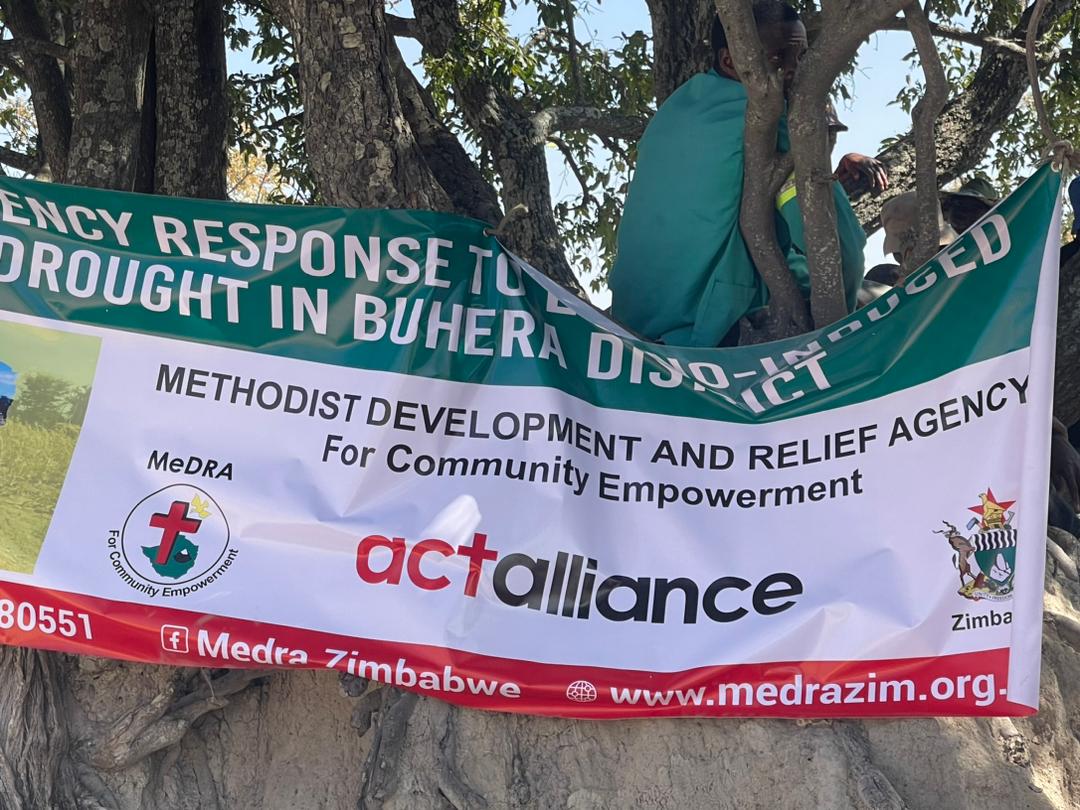
MeDRA Zimbabwe is responding to the El Nino-induced drought in Buhera District using ACT Alliance RRF funds by providing unconditional cash transfers to 1440 people, implementing WASH activities, and providing psychosocial support services over 3 months from July to September 2024.
The drought has mainly affected the most vulnerable communities that live in hard-to-reach areas of the rural areas of Zimbabwe, with Buhera district being one of the hardest hit areas in the country. Buhera districts lie in natural region 3 which experienced below-normal rainfall averaging 82.58mm per annum and soaring temperatures (23.88°C, which is 1.15% higher than Zimbabwe’s averages) in the 2023–24 agricultural season. The main livelihood activity in this district is rain-fed agriculture, which has, over the years, been seriously affected by climate variability and shocks. Crop yields have been going down, and most households have been failing to produce adequate food for household consumption. The areas have also been affected by the deterioration and shrinking of grazing areas due to invasive species, outbreaks of crop pests, and land degradation, resulting in the loss of productive land and poor soil fertility. The 2023–24 season has also seen a late onset of rain-reduced cropped areas and long dry spells that have led to the permanent wilting of over 30% of the planted crop, while over 20% is of poor quality. Only 15% of the crop is in good condition, yet this crop was planted late, hence expected to yield lower than optimum, compromising food security and nutrition. The El Nino phenomenon negatively affected the 2023–24 rain season, with a delayed onset of seasonal rainfall. The districts experienced a dry start to the rainy season, resulting in a shorter growing season. Rainfall amounts were below average during December 2023 and January 2024, and couple with an uneven temporal distribution of rains and higher-than average temperatures, vegetation conditions in these areas worsened as a dry season was experienced in January to March 2024.
Rain-fed agriculture is the main livelihood activity whereby communities produce mainly food crops for subsistence and surplus for sale. Small livestock production and casual labour are the other notable livelihood activities practiced by most households in the districts. Gardening is common between March and September in good years when there is adequate water from natural and manmade water sources. However, in the current year, the water sources have dried up by April. The current El-Nino drought, weather shocks, poor farming practices such as the use of uncertified seeds; monoculture; unavailability of contours, the use of old methods of farming, a lack of lucrative markets for agricultural commodities, and widespread poverty have contributed to high food and nutrition insecurity in the targeted district at large. The areas have been hit by devastating droughts that have been increasing their frequency of occurrence, either reducing crop yields or increasing livestock deaths. Buhera district is one of the worst districts in the country negatively affected by the cholera pandemic, as this has stretched for over a year in the area.
It is against this backdrop that MeDRA Zimbabwe has sourced funding from the ACT Alliance to respond to this drought emergency situation. The project is being implemented in the most food-insecure Ward 16 of the Buhera district.