
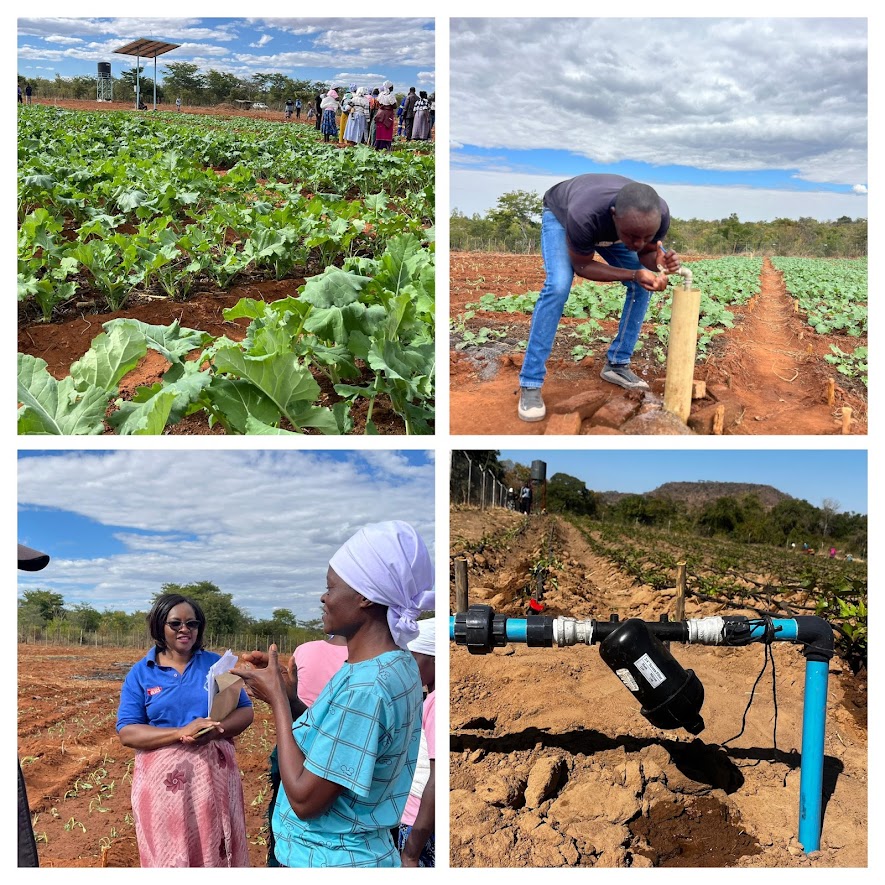
A quiet revolution is taking place in the heart of Zimbabwe, in the districts of Buhera and Gokwe South, where communities once fraught with environmental degradation, food insecurity, and social division are now charting a new, sustainable course. This transformation is the fruit of the “Fostering Community Activism in Advancing National Climate Adaptation Policy Priorities – Locally Led Climate Action Phase 2” project, a groundbreaking initiative by the Methodist Development and Relief Agency (MeDRA), with the support of ACT Alliance. The project has not only revitalised the environment but has also woven a stronger social fabric, empowering the most vulnerable and offering a blueprint for a more resilient future.
For the first time, our team used the Outcome Harvesting technique, a participatory approach that captures real stories of change, especially in complex programs where traditional baselines are missing. This method allowed us to surface the voices, experiences, and subtle shifts that numbers alone can’t reveal.
Before the project’s intervention, the communities of Buhera and Gokwe South were caught in a vicious cycle. Environmental degradation was rampant, with indiscriminate tree cutting and riverbank cultivation resulting in soil erosion, depleted water resources, and reduced crop yields. This, in turn, exacerbated food insecurity, forcing families to rely on a single, weather-dependent rain-fed farming season and often reducing their meals to just one a day. Socially, the communities were fractured, with political divisions hindering cooperation and progress. Women and youth faced significant challenges, with limited economic opportunities and a heavy burden of household chores.
The project has ushered in a new era of environmental stewardship. Communities have significantly reduced indiscriminate tree cutting and riverbed cultivation, leading to an observed increase in tree growth and perennial river flow. This change was fostered through a renewed appreciation for Indigenous Knowledge Systems (IKS) in climate adaptation. As one faith leader, Mai Chizhande, attests, traditional knowledge of trees like the Muswati and MuHwengedza has proven to be “100% accurate” in predicting rainfall patterns and crop yields, allowing for more informed farming decisions. The project also introduced practical solutions, such as drip irrigation, which has not only improved water conservation but has also been adopted at the household level, thereby enhancing the sustainability of agricultural activities. The revitalisation of Environmental Sub-Committees has empowered local leaders to enforce environmental laws, creating a system of accountability that ensures the long-term protection of natural resources. An ESC Secretary in Buhera noted, “MeDRA has revitalised our Environmental Subcommittees that were diminishing in the communities. They facilitated dialogues with the Environmental Management Agency (EMA), where we gained valuable insights. Additionally, they reinforced the use of our locally available solutions, such as Indigenous Knowledge systems, in adapting to climate change…”.
The heart of the project’s success lies in the strengthening of community gardens, which are the Tayaruka Community Garden in Gokwe South and the Kugarika Kushinga Garden in Buhera. These gardens, equipped with perimeter fencing and solar-powered water, have become hubs of activity and a reliable source of nutritious food, improving household food security and diversifying diets with crops like tomatoes, butternuts, and green leafy vegetables. The impact on individual lives has been profound. Margaret Moyo, a participant in the Tayaruka Community Garden, shared how the income from selling tomatoes enabled her to pay school fees for her children and purchase grain during a drought. Another community member was inspired to buy a solar water pump for their own garden, creating an “evergreen garden”.
Beyond the tangible benefits of food and income, the community gardens have nurtured something even more precious: social cohesion. In Madzivanyika village, where political divisions once ran deep, the garden has become a space of unity and collaboration. As Village Head Madzivanyika shared, “Politics was dividing people in my village, but by working together in the community garden, we have maintained an apolitical stance…This approach has helped resolve political differences and polarisation, allowing us to live in harmony”. The gardens, along with the formation of Internal Savings and Lending (ISAL) groups, have fostered a spirit of collective action, reduced idleness and created a more productive and self-reliant community.
The project has had a particularly transformative impact on the lives of women and girls. Increased financial independence through the sale of garden produce and participation in ISAL groups has empowered women, reducing their reliance on men and contributing to a decrease in gender-based violence. The installation of solar-powered boreholes has dramatically reduced the time women and girls spend fetching water, freeing them to pursue education and other productive activities. This has not only improved their well-being but has also fundamentally shifted traditional gender roles. As the Madzivanyika Village Head observed, “Women are now generating their income and are no longer bothering men to purchase food. This has empowered women and reduced Gender Based violence. There is peace in the community”. The project has also brought significant health benefits, with access to clean and safe water leading to a community-reported reduction in waterborne diseases like diarrhoea.
The journey of Buhera and Gokwe South is a powerful testament to the impact of locally led climate action. By empowering communities to take ownership of their development, the project has not only addressed the immediate challenges of climate change but has also laid the foundation for a more sustainable, equitable, and prosperous future. The story of these communities is a story of hope, resilience, and the enduring power of collective action in the face of adversity.