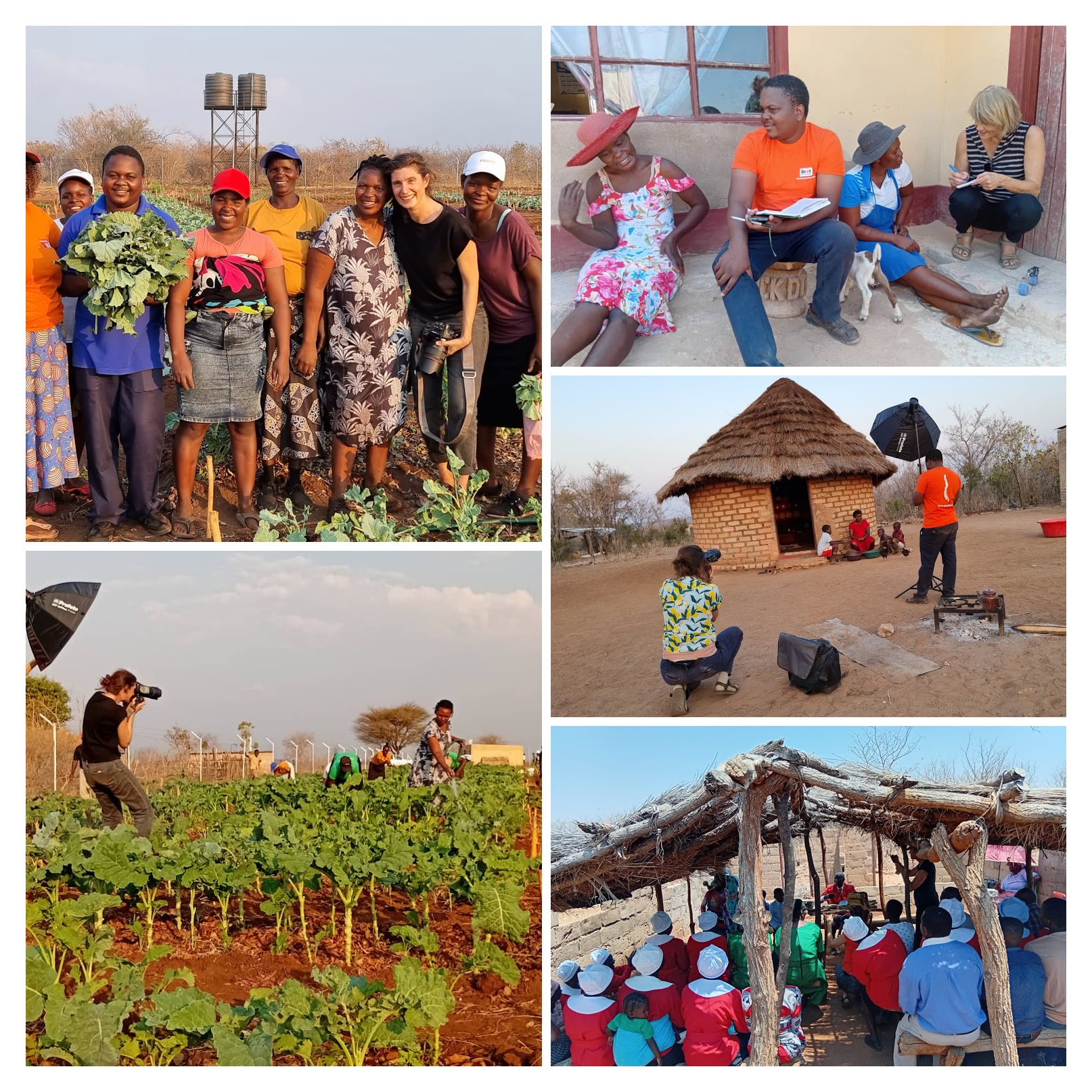
In early October 2025, the community of Mbizvo Village in Ward 13, Gokwe South, came alive with a sense of pride and purpose as Bread for the World (Brot für die Welt) sent a two-member media team—a journalist and a photographer—to document how improved access to water is transforming lives. The visit formed part of preparations for Bread for the World’s 2026 global communications and fundraising campaign, in which MeDRA’s project, Building Resilience and Self-Reliant Communities in Rural Areas, has been selected as one of only six exemplary projects worldwide out of over 1,800 initiatives supported globally. This recognition highlights not only MeDRA’s technical achievements but also the deep human stories of resilience, faith, and transformation taking place in Zimbabwe’s rural heartlands.
The primary objective of the visit was to document how improved access to water contributes to better nutrition, health, and livelihoods among smallholder farmers. Guided by MeDRA’s field staff, the Program Manager and the Monitoring, Evaluation and Learning Officer and local leaders, the visiting journalist and photographer spent an immersive week in Mbizvo Village, engaging with communities and understanding their daily realities beyond the statistics and project indicators. The documentation focused on portraying the project’s impact through individual stories—following selected beneficiaries as they fetched water, irrigated nutrition gardens, cared for their families, and took part in group activities. These deep, personal encounters were complemented by interviews that captured how access to clean water has redefined life in the community.
Unlike conventional monitoring missions, this visit emphasised authenticity and empathy. The team sought to portray human transformation rather than staged moments. To ensure a meaningful narrative, six beneficiaries were carefully preselected to represent different aspects of the project’s impact. These included members of solar-powered nutrition gardens, who now produce vegetables year-round; water point committee members, who oversee sustainable water management; and farmers who use rehabilitated deep wells for household and livestock needs. During the first day, the visitors met all selected participants and then chose one family with school-going children, whose personal journeys best reflected the project’s holistic impact. They spent the following days accompanying them in their daily routines, observing the blend of hard work, hope, and community that defines rural life.
As a Christian organisation, Bread for the World also wished to experience the spiritual life of the community. On the final day, the team attended a church service in Mbizvo Village on Sunday, participating in worship and giving thanks at the Methodist Church in Zimbabwe’s Chiuraye Society, to which the chosen family belongs. It was a heartfelt celebration, filled with songs, prayers, and testimonies about how the gift of water has renewed life and faith. This moment captured the spirit that sustains both MeDRA’s work and its partnership with Bread for the World—the understanding that development is not only about infrastructure, but about restoring dignity, connection, and hope.
The stories and visuals collected in Mbizvo will feature in Bread for the World’s 2026 Advent Campaign, a major annual initiative that mobilises congregations and individuals worldwide to support transformative projects. Every year, the campaign highlights six global stories that embody the organisation’s mission to promote justice and compassion through action. MeDRA’s project will be featured through brochures, magazines, and digital media, including videos, social media posts, and online exhibitions. Through these platforms, the voices of rural Zimbabwean farmers, mothers, and youth will reach audiences across Europe and beyond, sharing both the challenges of climate-affected communities and the inspiring resilience of those who continue to thrive through innovation and faith.
Since its inception, the Building Resilience and Self-Reliant Communities in Rural Areas project, a continuation of the Building Resilience in Gokwe South Communities (BRiGSC) project supported by Bread for the World, has improved access to safe water and strengthened livelihoods in the arid district of Gokwe South. Through solar-powered piped water schemes, rehabilitated deep wells, and efficient drip irrigation systems, communities have transformed their nutrition gardens into productive, green spaces that supply both food and income throughout the year. The project has also trained local water point committees, enhanced community nutrition, and empowered women to take leadership roles in water management. For many, the benefits go beyond physical health—time once spent walking long distances for water is now used for farming, childcare, and other productive activities. “Access to clean water has changed everything,” shared one beneficiary during the interviews. “Our children are healthier, our gardens are green even in dry months, and women no longer walk long distances for water. We now have time to grow food, attend meetings, and plan for our families.”
In line with the team’s request, MeDRA and the local community kept the visit simple and focused on field interactions rather than formal ceremonies. There were no elaborate welcomes—just open conversations, laughter, and honest storytelling. This atmosphere allowed the media team to engage deeply with people, capturing genuine emotions and everyday moments that define rural resilience. For MeDRA, it was both a reflection and a celebration: an opportunity to look back at the transformation achieved through partnership and to look ahead to greater visibility that will amplify the voices of Zimbabwe’s rural communities on a global stage.