
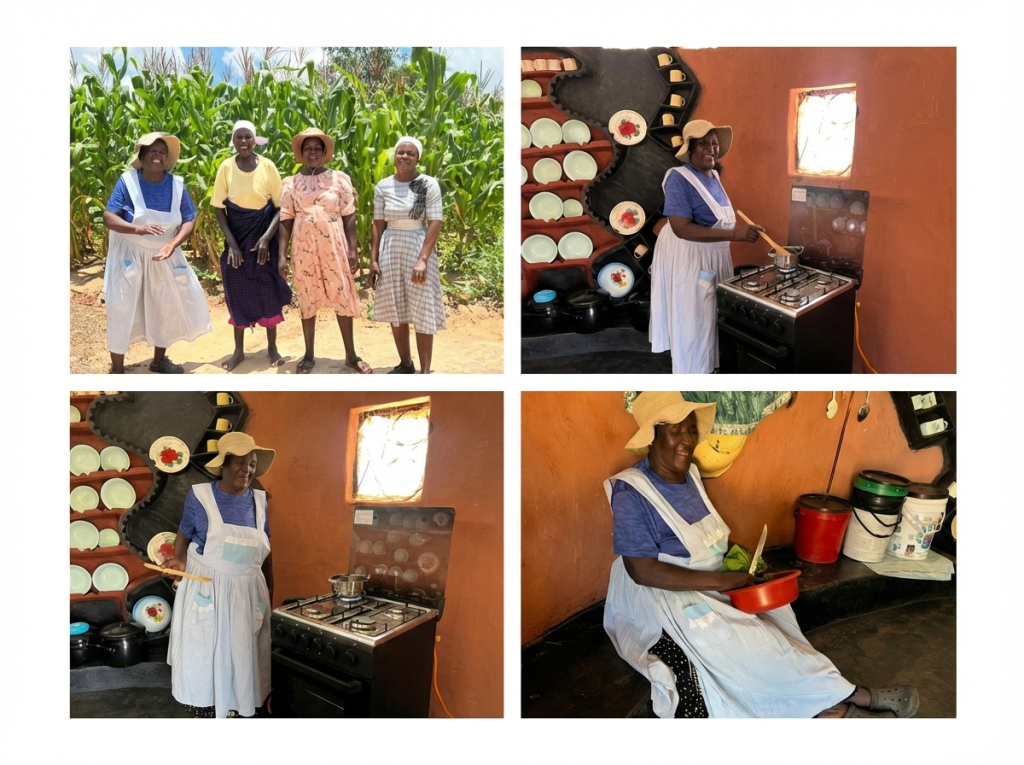
At 74 years old, Lydia Shamhu knows what it means to carry responsibility long after most people would have rested. A grandmother caring for two primary-school-going grandchildren, Lydia’s days used to begin before sunrise. Preparing meals meant one difficult task after another, slow walks to fetch firewood, aching joints, and the constant worry of whether she would manage in time for her grandchildren to get to school.
“Walking long distances to collect firewood was painful for me,” Lydia recalls. “Some days I wondered how long I could continue like that.”
In 2023, hope quietly arrived in the form of the Chenesai ISAL group, a savings and lending group made up of ten women with shared struggles and shared dreams. Lydia joined the group, contributing US$5 like everyone else. Beyond the small weekly contributions, the women were united by one clear objective: each member wanted to own a gas stove, a cleaner, safer, and smarter alternative to firewood.
“We agreed from the beginning that this was not just about saving money,” Lydia says. “It was about changing how we live.”
Through discipline, trust, and collective commitment, the group saved steadily. In November last year, the long-awaited share-out finally came. True to their shared vision, every woman used her money to buy a gas stove, including Lydia.
Today, Lydia’s kitchen tells a different story. There is no rush to collect firewood, no smoke filling the room, and no exhaustion before the day has even begun. Meals are prepared earlier and more easily, allowing her grandchildren to leave for school on time and return home to warm food waiting for them.
“My life is easier now,” Lydia smiles. “I can cook without pain, and my grandchildren are well cared for.”
Beyond convenience, Lydia understands the bigger picture. Using gas has reduced her dependence on firewood, contributing to the protection of nearby forests and helping to curb environmental degradation.
“Firewood was destroying our forests,” she explains. “Gas is smart energy, for us and for the environment.”
This story reflects the outcome of improved household resilience, women’s economic empowerment, and the adoption of environmentally sustainable practices. Lydia’s journey is significant because it shows how small, community-driven savings groups can unlock dignity, health, and environmental stewardship, especially for elderly women often left behind. Thanks to the resilience initiative by MeDRA Zimbabwe, supported by Brot für die Welt and UnitingWorld.