
In Zimbabwe, where climate change is intensifying agricultural challenges, equitable access to adaptation finance is more urgent than ever. The African Development Bank reports that only a fraction of climate finance reaches the communities that need it most. Most smallholder farmers, who make up over 80% of the country’s agricultural workforce, face substantial barriers to obtaining the resources required to implement climate-resilient practices. Faith-based organizations, with their vast influence and commitment to social justice, can play a transformative role in advocating for a fairer distribution of these critical funds.
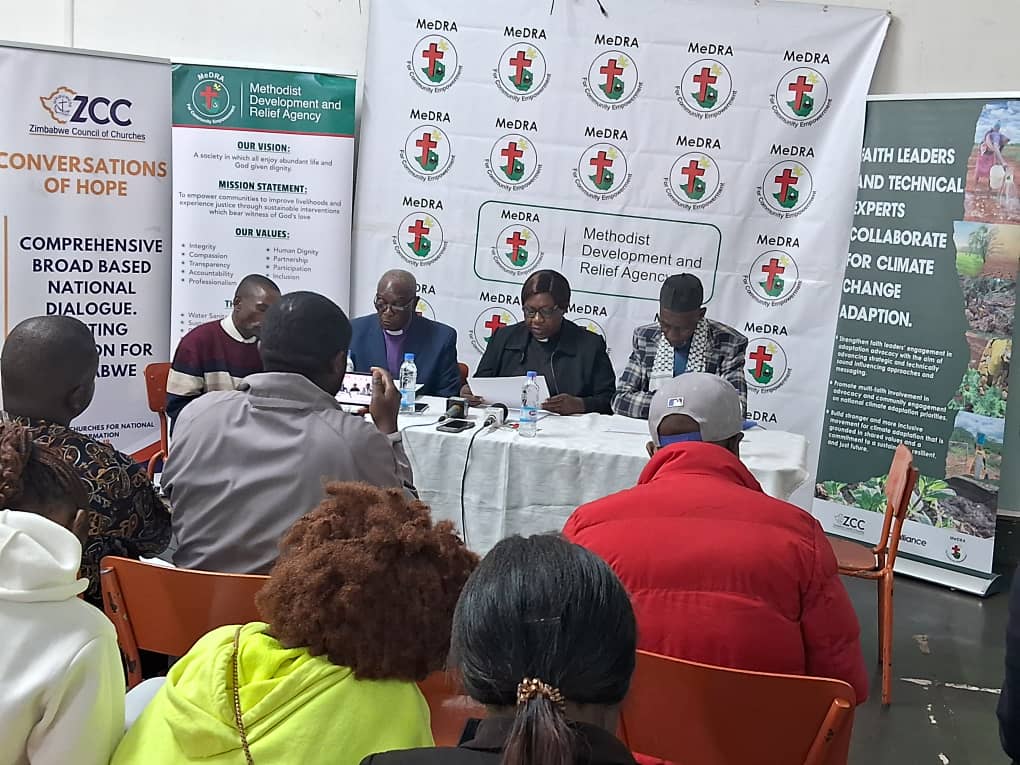
The climate crisis is a moral issue as much as an economic one, and faith actors have a long-standing tradition of standing up for the vulnerable. The Zimbabwe Multifaith Climate Change Action Group, supported by the BMGF project, has become a strong voice for equitable adaptation finance. They have called on both government bodies and international donors to allocate funds in a way that reaches the marginalized rural farmers who are hit hardest by climate impacts. This coalition through their call-to-action statement and press release emphasized on the principle that adaptation resources should be accessible at the grassroots level and not just for large-scale, commercial farmers.
The African Union’s Agenda 2063 and Zimbabwe’s own Vision 2030 both emphasize the need for a sustainable and inclusive economy. Yet, adaptation finance remains limited in reach, often constrained by bureaucratic red tape and a lack of targeted policies that address the unique needs of rural farmers. Faith leaders, leveraging their moral authority and wide networks, have a unique opportunity to push for reforms that streamline funding processes and prioritize local community projects.
To bridge this gap, the Zimbabwe Multifaith Climate Change Action Group has been actively advocating for a portion of adaptation finance to be directed toward smallholder farmers through community-led initiatives. In a recent call to action statement, they called for a 50% increase in grants for community projects, pointing to successful examples where adaptation finance was directly channelled to local farmers, leading to improved crop yields and household income.
By leading calls for equitable adaptation finance, faith leaders can spotlight the inequalities that exist within the current system and promote a fairer distribution of resources. A just approach to climate adaptation finance can ensure that all Zimbabweans, regardless of socioeconomic status, have the means to adapt and thrive in the face of climate change.